

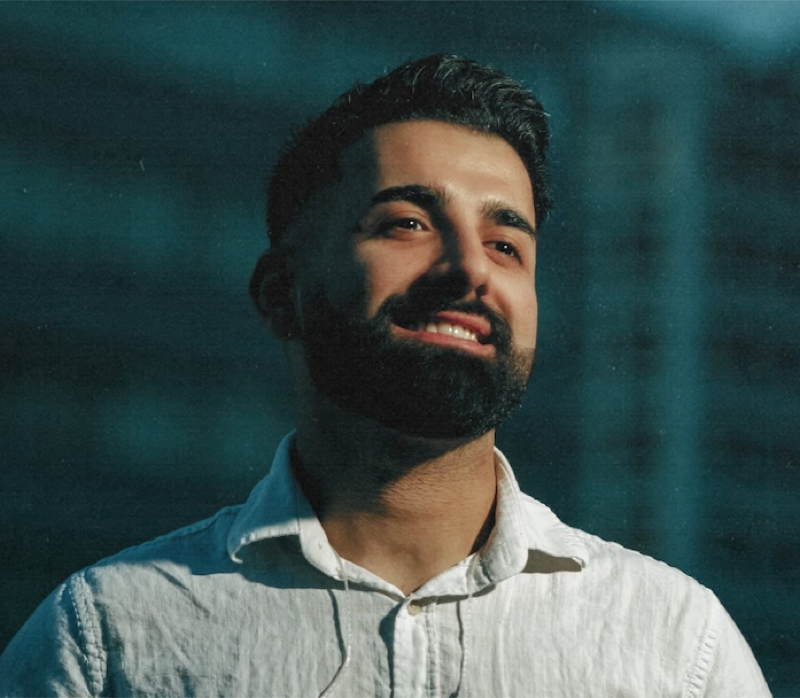
Founder
Ronkay Arslan
Founder of Tase LLC. Building Tase in Houston, Texas.
Why this exists
I kept losing things. Not important documents — small facts. What I ate, what the doctor said, what I spent, the idea I had in the car. Every one of those had an app, and every app wanted thirty seconds and four taps at exactly the moment I had neither.
So the tracking stopped, the way it stops for almost everyone, and the apps sat there holding two weeks of enthusiastic data and nothing after it. The problem was never discipline. It was that the price of recording something was higher than the value of having recorded it.
Tase is one bet about that: if you can say it once and have it land in the right place, you will keep doing it — and once you have a year of that, an assistant can finally tell you something you did not already know.
What has actually been built
Tase is a full assistant on iPhone and the web: voice capture, a second brain you can search across, 192 agent templates, and tasks, goals, health and finance kept in one record rather than five apps. Android and macOS are in development and have no store listing yet.
There have been 53 releases since 2026-05-22, each one written up in public. That is the number I would rather be judged on than any deck, and it is the one thing a solo founder controls completely.
The four-platform bet
Most assistants pick one surface. An assistant you only reach on one device is one you stop reaching for, because the moment you needed it was in the car, or at a desk, or on a phone that was not the one in your hand. Tase shares a cross-platform core so the same account and the same memory show up everywhere, and the platform-specific part stays thin enough for one person to keep shipping.
That architecture is the reason a solo founder can hold four platforms at all, and it is the part of this I would want a technical person to look at first.
Building in public
Everything ships with a changelog entry, the roadmap says what is not built yet, and the metrics page states which numbers we are not publishing and why. It is a slower way to market something and a much harder one to fake, which is the point.